


University
Destinations
Home > Learning > Secondary > Sixth Form > University Destinations
University Pathways
Life Beyond GIS
Every year, our students gain admission to some of the most distinguished institutions across the globe. In 2025, our students went on to study 41 unique courses at 45 unique institution in 12 different countries.
We congratulate our Class of 2025 on their remarkable achievements and wish you all a university experience filled with growth, joy, and endless opportunities.
1 in 5
GIS students will attend TOP 10 universities
1 in 2
GIS students will attend TOP 100 universities
100%
GIS students will attend their first choice or second choice of university
41
unique institutions worldwide have admitted GIS students
99%
60%
GIS students attend TOP 100* universities worldwide
20%
10%
* Universities rankings are according to QS World University Rankings 2025: Top Global Universities
Our Student's University Destinations
GIS is your pathway
to the best universities
in the world
Have you had Weberous?
I hear they’re contagious.
It's true. We spread.
- GREECE
- JAPAN
- ENGLAND
- FRANCE
- CHINA
- KOREA
- DUBAI
- RUSSIA
- SAUDI ARABIA
- SINGAPORE
- UNITED STATES


- These figures are based on University destinations of GIS Students between 2021 – 2025
University Destinations
We have placed GIS graduates at universities worldwide including:
United Kingdom
University of Cambridge
University of Oxford
Imperial College London
University College London
The University of Edinburgh
University of Manchester
King's College London
London School of Economics and Political Science
University of Bristol
University of Warwick
University of Leeds
- University of Glasgow
- Durham University
- Trinity College Dublin
- University of Southampton
- University of St Andrews
- Bournemouth University
- Cardiff University
- City, University of London
- Hull York Medical School
- Lancaster University
- Loughborough University
- Newcastle University
- Oxford Brookes University
- Queen Mary University of London
- Queen's University Belfast
- Regent's University London
- Royal Holloway
- University College Cork
- University College Dublin
- University of Aberdeen
- University of Bath
- University of Central Lancashire
- University of Dundee
- University of Essex
- University of Exeter
- University of Kent
- University of Leicester
- University of Liverpool
- University of Plymouth
- University of Reading
- University of Strathclyde
- University of Surrey
- University of Sussex
- University of the Arts London
- University of York
North America
Harvard University
University of California, Berkeley
Yale University
University of Toronto
New York University
Carnegie Mellon University
University of California, San Diego
University of Washington
- Arizona State University
- Dalhousie University
- Embry-Riddle Aeronautical University
- University of California, Davis
- University of California, Irvine
- University of Alberta
- University of Southern California
- Washington State University
Rest of Europe
Delft University of Technology
Vrije Universiteit Amsterdam
- Conservatoire de Rouen
- Culinary Arts Academy Switzerland
- Essec Business School, France
- Fontys University of Applied Sciences
- Leiden University
- Radboud University
- Tilburg University
- Universidad Europea de Madrid
- University of Groningen
Asia
Hong Kong University
Seoul National University
Korea Advanced Institute of Science & Technology
Hong Kong University of Science & Technology
Korea University
Monash University, Malaysia
Oceania
University of Melbourne
University of New South Wales
University of Sydney
Otago University
Royal Melbourne Institute of Technology
United Kingdom
University of Cambridge
University of Oxford
Imperial College London
University College London
The University of Edinburgh
University of Manchester
King's College London
London School of Economics and Political Science
University of Bristol
University of Warwick
University of Leeds
- University of Glasgow
- Durham University
- Trinity College Dublin
- University of Southampton
- University of St Andrews
- Bournemouth University
- Cardiff University
- City, University of London
- Hull York Medical School
- Lancaster University
- Loughborough University
- Newcastle University
- Oxford Brookes University
- Queen Mary University of London
- Queen's University Belfast
- Regent's University London
- Royal Holloway
- University College Cork
- University College Dublin
- University of Aberdeen
- University of Bath
- University of Central Lancashire
- University of Dundee
- University of Essex
- University of Exeter
- University of Kent
- University of Leicester
- University of Liverpool
- University of Plymouth
- University of Reading
- University of Strathclyde
- University of Surrey
- University of Sussex
- University of the Arts London
- University of York
North America
Harvard University
University of California, Berkeley
Yale University
University of Toronto
New York University
Carnegie Mellon University
University of California, San Diego
University of Washington
- Arizona State University
- Dalhousie University
- Embry-Riddle Aeronautical University
- University of California, Davis
- University of California, Irvine
- University of Alberta
- University of Southern California
- Washington State University
Rest of Europe
Delft University of Technology
Vrije Universiteit Amsterdam
- Conservatoire de Rouen
- Culinary Arts Academy Switzerland
- Essec Business School, France
- Fontys University of Applied Sciences
- Leiden University
- Radboud University
- Tilburg University
- Universidad Europea de Madrid
- University of Groningen
Asia
Hong Kong University
Seoul National University
Korea Advanced Institute of Science & Technology
Hong Kong University of Science & Technology
- Korea University
- Monash University, Malaysia
Oceania
University of Melbourne
University of New South Wales
University of Sydney
- Otago University
- Royal Melbourne Institute of Technology
Preparing Students for Success
GIS Support and Guidance
Higher Education Guidance
At GIS, our expert team of Higher Education Advisors offer personalised support to our students. Their expertise and guidance enable students to navigate their options post GIS with ease.
GIS Alumni
We have a thriving community of alumni living and working across the world. Diverse and well connected, this network consistently provides support and guidance for existing students and alumni in all corners of the globe.
Want to find
out more
Main Menu
- Home
- About GISAbout GIS
- Learning
Learning- Admissions
Language
- Learning
Sixth Form Curriculum: Year 12 & 13
Year 1 & 2
Key Stage 5 (age 16 to 18)
Year 12 & 13 Curriculum

Introduction
The GIS Sixth Form promotes academic excellence in all students, offering international AS and A Level qualifications. These are delivered by outstanding teachers with knowledge and expertise in Key Stage 5 education, who are always ready to go the extra mile to set their students on the path to success.
However, our philosophy of education goes far beyond that. We are proud of our bespoke Sixth Form Diploma which allows students to enrich their studies beyond the formal curriculum, develop leadership skills and nourish a love of learning. In Sixth Form, we recognise the need to equip our students with the soft skills that will prepare them for like beyond our school, and are proud of the opportunities our students have to do this as part of our THRIVE Programme, GIS electives and through our extensive CCA programme.
Underpinning everything we do is our approach of academic care. As well as the care and support of their tutors team, our students complete lessons in Social and Emotional Learning to promote the wellbeing and understanding of others that helps support their success both during their time in GIS and beyond.
As a result of our track record of academic excellence, holistic approach and skills-based education, it is not surprising that GIS Sixth Form students are sought after by the world’s best universities.
In The Classroom
Taught Curriculum
Students can select from a wide range of A Level subjects which are recognised globally and support our students’ progression to universities in a wide range of countries. These are taught by subject specialists who inspire students to explore their passions and provide rigour and challenge to develop higher-order thinking skills.

A Level
(Cambridge & Edexcel)
- English Literature
- Mathematics & Further Mathematics
- Biology, Chemistry, Physics
- History, Geography, Psychology, Sociology
- Business, Computer Sciences, Economics
- Mandarin, Spanish, French
- Art and Design, Photography, DT – Product Design, Drama and Theatre Studies, Music
- Social Emotional Learning
Beyond the Classroom
Wider Learning
The range of opportunities that our students benefit from beyond their taught curriculum causes them to really stand out. Our wider learning programme gives students the opportunity to get involved in things that they enjoy, build a sense of community and develop skills that they will use in later life.

- Dragons Sport Programmes
- Outdoor Education Camps
- Expedition Leader Award
- CCA Programmes
- Student Leadership Programmes
- Secondary School Production
- Common Sense Media Digital Citizenship Curriculum
Bespoke Learning
GIS Diploma Programme
At GIS, we believe in the importance of a holistic education, which is about more than just achieving fantastic A Levels. We believe it also needs to prepare our students for the future, enabling them to develop a broad knowledge and a wide range of skills. For this purpose, we have developed our curriculum, offering an extensive choice of electives that will help prepare students for the next steps and life beyond school. Our GIS Sixth Formers are given the opportunity to complete the GIS Diploma or the GIS Diploma with Honours.

A GIS Diploma is awarded to students who:
- Achieve at least three good A-levels
- Complete an elective
- Complete a Social and Emotional Learning course
A GIS Diploma with Honours is awarded to students who:
- Achieve at least three good A Levels
- Complete an elective
- Complete a Social and Emotional Learning course
- Complete the ‘GIS Thrive’ Internship programme (a four week professional internship, unique to GIS)
Secondary Curriculum: Year 10 & 11
Year 10 & 11
Key Stage 4 (age 14 & 16)
Year 10 & 11 Curriculum
Introduction
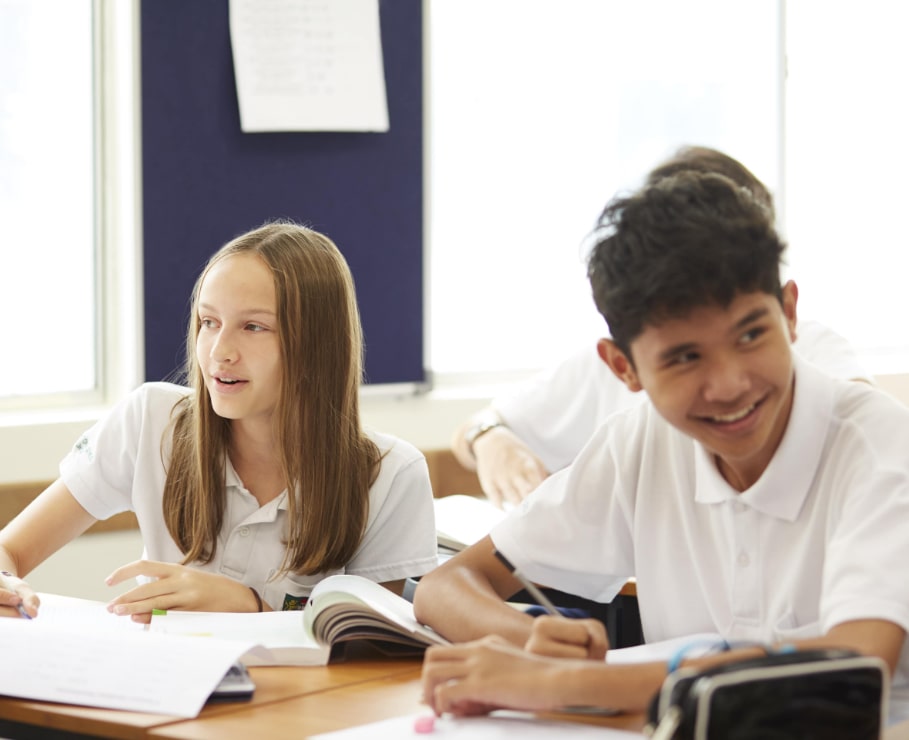
The Secondary School curriculum at GIS focuses on supporting young confident adults to reach their potential, in line with our GIS Learner Skills and our commitment to ensuring academic care for all.
Our Year 10 to 11 (KS4) curriculum is designed to meet the academic, personal and cultural needs of our students and better equip them for future challenges, while at the same time creating enjoyable learning environments that inspire and motivate. Students begin to select courses that appeal to them and follow a broad range of examined and non-examined subjects that prepare them for success both in and out of the classroom. Alongside examined subjects, students follow courses designed to develop them as individuals through Social Emotional Learning and a range of elective subjects. The Year 10 and 11 curriculum creates young adults not only with strong academic credentials but who are also well rounded individuals ready for the next stage of their learning.
Our focus on involvement outside the classroom alongside academic excellence aims to create the opportunity for students to become world changers in both their local and global communities.
In The Classroom
Taught Curriculum
Our KS4 taught curriculum provides students with a balanced yet bespoke programme of study at GIS. At its core is a personalised combination of International GCSE qualifications that all students undertake and enhanced by our elective program. To ensure students are well rounded with successes beyond just academic achievements, the programme offers all students in KS4 a range of bespoke GIS elective courses as well as the study of Social and Emotional Learning. This balanced robust curriculum ensures students are well prepared for our our outstanding GCE (A Level) programme in Key Stage 5 (Years 12-13) or study beyond GIS. As with all other Key stages academic care remains central to our ethos with regular curriculum time allocated to the pastoral system and supported through contact with tutor groups.

Core Subjects
- Mathematics or Fast Track Mathematics
- English Language
- English Literature
- Co-ordinated Science
- Global Awareness Project
Option Subjects
- Accounting
- Art
- Business
- Computer Sciences
- DT Resistant Materials
- DT Graphics
- Drama
- Economics
- Geography
- History
- ICT
- Music
- Photography
- Physical Education (PE)
- Sociology
- World Languages: Malay, Mandarin, French, Spanish
Beyond the Classroom
Wider Learning
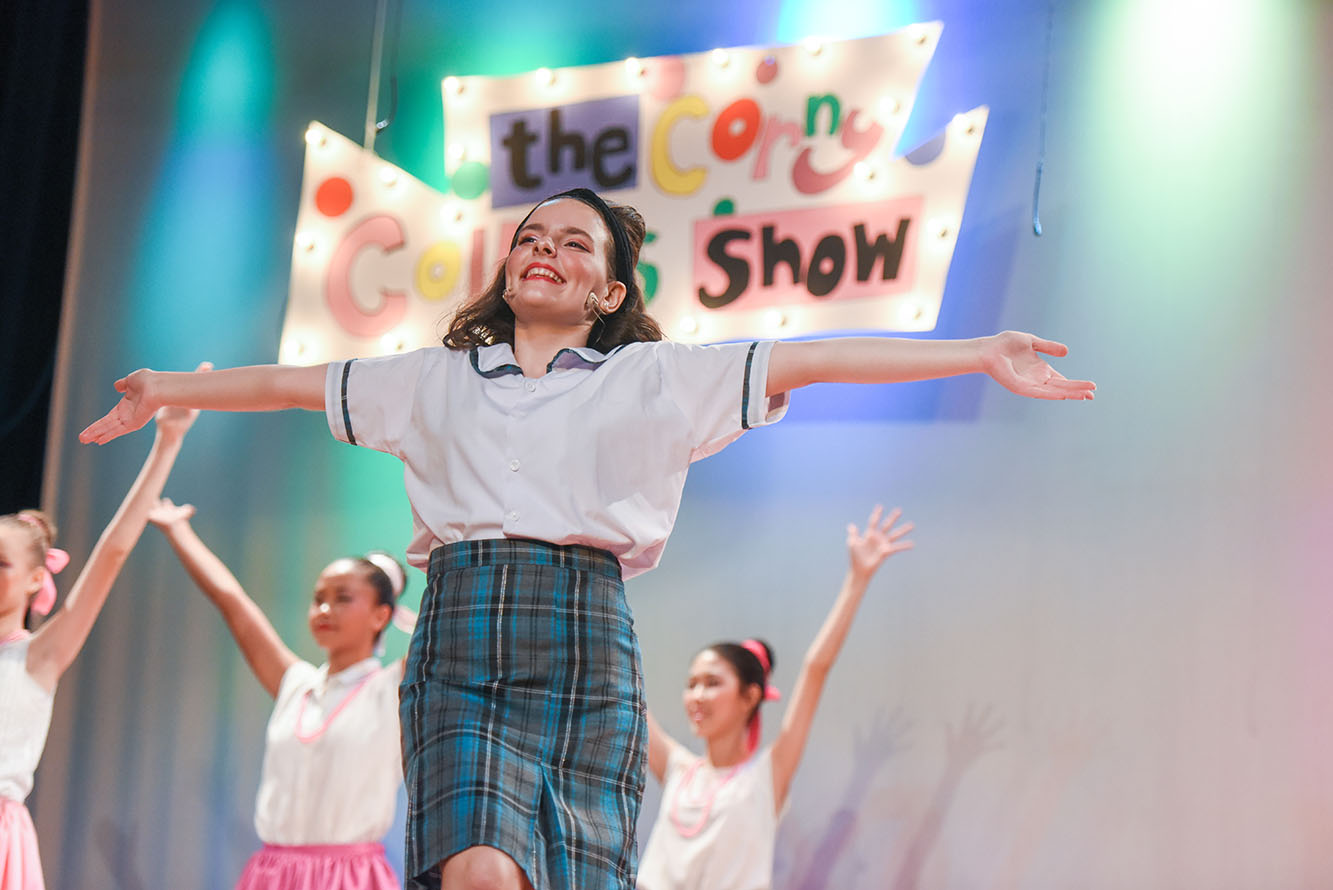
Our KS4 wider curriculum supports students in their engagement, enjoyment and personal personal development as they move through Years 10 and 11. A wide range of activities are available that take place beyond timetabled lessons enable all students to gain engage in our school community and develop as individuals.
- Co-Curriculum (CCA) Programme
- Outdoor Education Camps
- Secondary School Production
- Dragons Sport Programmes
- Social Emotional Learning Programme
- Student Leadership Programmes
- Expedition Leader Award
- Common Sense Media Digital Citizenship Curriculum
Bespoke Learning
GIS Elective Programme
At GIS we believe in the importance of a holistic education that is more than just achieving fantastic IGCSEs: it also needs to prepare you for the future, which requires a broad knowledge and wide range of skills. For this purpose, we have developed our curriculum, offering an extensive choice of electives that will extend learning and help prepare you for your own next steps and life beyond education.

Secondary Curriculum: Year 7 to 9
Year 1 & 2
Key Stage 3 (age 11 to 14)
Year 7 to 9 Curriculum

Introduction
The Secondary School curriculum at GIS focuses on supporting young confident adults to reach their potential, in line with our GIS Learner Skills and our commitment to ensuring academic care for all.
Our Year 7 to 9 (KS3) curriculum is designed to meet the academic, personal and cultural needs of our students and better equip them for future challenges, while at the same time creating enjoyable learning environments that inspire and motivate. Students follow a broad and balanced range of subjects that are linked to the National Curriculum of England and Wales but modified to create courses appropriate for an international education.
Our focus on involvement outside the classroom alongside academic excellence aims to create the opportunity for students to become world changers in both their local and global communities.
In The Classroom
Taught Curriculum
Our KS3 taught curriculum provides students with a broad and balanced approach to study at GIS. A range of subjects are followed that gives learners a solid foundation to build upon in later years and ignite a passion for learning. Alongside delivering strong academic foundations, our KS3 taught curriculum is supported through our academic care provision. Students are supported by one-to-one conversations with subject teachers and tutors about their learning.

Subjects
- English
- Science
- Mathematics
- History
- Geography
- Drama
- Art
Subjects
- Music
- Design Technology (DT)
- ICT & Enterprise
- ICT & Enterprise
-
World Languages:
Malay, Mandarin, French, Spanish
Beyond the Classroom
Wider Learning
Our KS3 wider curriculum supports students in their engagement, enjoyment and personal development as they move through Years 7 to 9. A wide range of activities are available that take place beyond timetabled lessons enable all students to gain engage in our school community and develop as individuals.

- Social Emotional Learning Programme
- Student Leadership Programmes
- Key Stage 3 Production
- Secondary School Production
- Co-Curriculum (CCA) Programme
- Outdoor Education Camps
- Dragons Sport Programmes
- Common Sense Media Digital Citizenship Curriculum
Early Years Curriculum: Nursery & Reception
Nursery & Reception
Early Years Foundation Stage (age 3 & 5)
Nursery & Reception Curriculum

Early Years
Our EYC learning environment, both inside and outside, is well-resourced and offers a wide range of multi-sensory learning opportunities that are linked to the UK Early Years Foundation Stage (EYFS) Curriculum. We balance play-based learning with the teaching of fundamental literacy and numeracy skills, PE and music lessons, as well as social and emotional skill development.
Mandarin is taught as an additional language through a combination of discrete teacher-led sessions, and as part of continuous provision, with our outstanding teachers encouraging authentic and natural language acquisition amongst our youngest learners.
Throughout their time at EYC, our young learners have opportunities to follow their interests and take ownership over their learning. This is encouraged through first-hand experiences that create a sense of awe and wonder for children, inspiring them to learn more about the world around them.
Children’s brains develop connections faster in the first five years than at any other time in their lives. This is the time when the foundations for learning, health and behaviour throughout life are laid down. In fact, by the time they turn five 90% of their brain will have been developed.
Our curriculum and approach are designed to ensure that a strong foundation is laid down to support your child’s further development throughout their life.
In The Classroom
Taught Curriculum
Our Early Years offering consists of carefully designed opportunities to learn through play, directed curriculum and wider learning opportunities such as Jungle School, gardening and cooking.

A Unique Child
- Playing and Exploring
- Active Learning
- Creating and Thinking Critically
Prime
- Personal, Social and Emotional Development
- Communication & Language
- Physical Development
Specific
- Literacy
- Mathematics
- Understanding the World
- Expressive Arts and Design
Mandarin
Jungle School Programme
- Outside of classroom learning in a natural environment
Beyond the Classroom
Wider Learning
Even at EYC, we offer a broad curriculum, with the aim of igniting passions and developing new interests amongst our children. We offer swimming, Water Play Days, Woodwork, Cooking, Trips and CCAs. We also offer our Jungle School programme. Unique to Malaysia, this is a hands-on programme based on the ‘Forest School’ approach in Europe. At Jungle School, our EYC children are able to learn about nature, explore and take risks is a safe and controlled environment and learn to become responsible citizens of the earth who respect and preserve her resources.

- Free flow
- Jungle School Programme
- Day Trips
Primary Curriculum: Year 3 to 6
Year 3 to 6
Key Stage 2 (age 7 to 11)
Year 3 to 6 Curriculum
Introduction
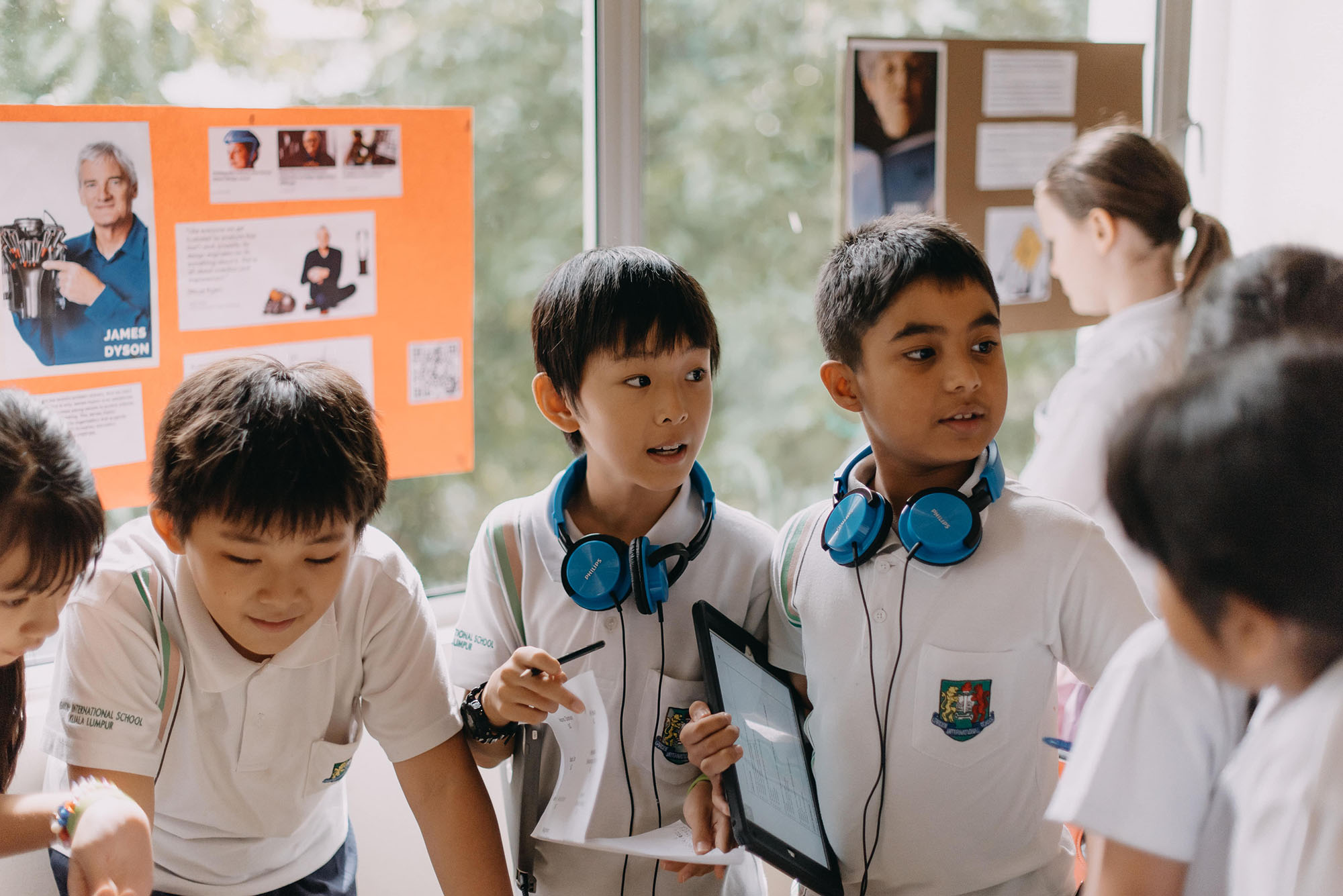
This stage builds upon the foundations laid in the Early Years and Key Stage 1, preparing children for the next phase of their education. English is taught daily with a strong emphasis on the development of speaking, listening, reading and writing skills. The development of practical, mental and applied mathematics is achieved through our mathematics lessons.
In Years 5 and 6, French and Spanish are added to the World Languages programme. Students can decide to continue learning the Asian language they have been learning or replace this choice with one of the European languages. Either way, they will still have the opportunity to learn the other language as part of the language club programme after school. Homework is provided throughout the school, and is aimed at consolidating skills taught at school and encouraging parents to play an active role in their children’s education.
Children’s progress is assessed throughout Key Stages 1 and 2 to ensure we have a good understanding of their ongoing progress, individual abilities and to ensure their future needs are met.
In The Classroom
Taught Curriculum
The Primary Curriculum follows a topic-based, cross-curriculum approach to learning with the British National Curriculum as it’s foundation. Soft skills are developed through a set of bespoke ‘Golden Threads’ that are carefully interwoven throughout the curriculum.

Subjects taught in our topic curriculum are:
- English
- English Literature
- Mathematics
- History
- Geography
- Information & Communication Technology (ICT)
- Design Technology
Specialist Teaching subjects are
- Music
- Art & Design
- Physical Education (PE)
- World Languages: Malay, Mandarin, French and Spanish
Beyond the Classroom
Wider Learning
In Year 3 to Year 6 we offer our students wider learning opportunities to encourage them to learn new interests and skills beyond the classroom including:

- CCA (Co-curricular) programmes
- Language Club programme
- Student leadership
- Upper Primary School Production
- Community Service Programmes
- Camp Weeks
- Dragons Sport Programmes
Primary Curriculum: Year 1 & 2
Year 1 & 2
Key Stage 1 (age 5 to 7)
Year 1 & 2 Curriculum
Introduction
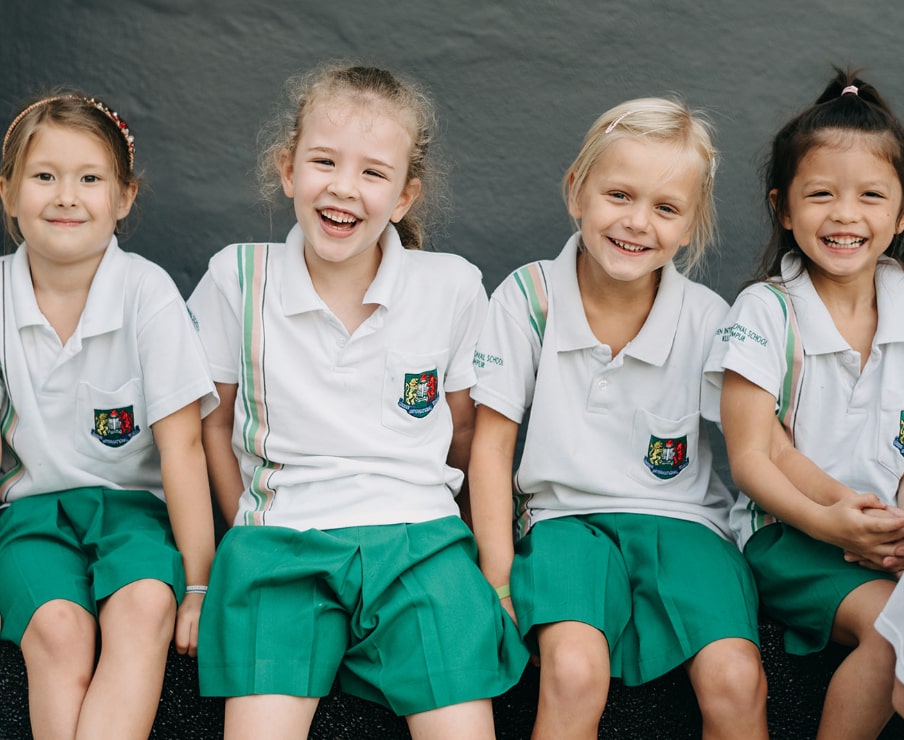
The first key stage of school welcomes children from Early Years into the Primary School and encourages each child to continue their development and maintain the fun, active approach to learning. Information Communication Technology (ICT) is used to support the learning process. Classroom-based learning along with a broad co-curricular programme and education outside the classroom ensure we provide a holistic education for your child.
The majority of learning takes place in the nurturing environment of the classroom facilitated by the classroom teacher and assistant teachers. Specialist teachers support the teaching of Art, Music, ICT and Physical Education. In World Languages, students learn Mandarin or Bahasa Malaysia – the national language, helping them to develop the skills and passion to learn an additional language in depth. Students also have the opportunity to explore other languages as a part of the language club programme which happens after school. Science, History, Geography, Design Technology and Drama are taught through our exciting Topic Curriculum which is underpinned by the ‘Golden Threads’ of Intercultural Learning and Social and Emotional Learning.
GIS utilises both the classroom and education opportunities outside the classroom to provide a programme that develops World Changers. At GIS we believe that our responsibility goes beyond producing outstanding academic results. We are fully committed to providing a holistic, well-balanced education.
In The Classroom
Taught Curriculum
The Primary Curriculum follows a topic-based, cross-curriculum approach to learning with the British National Curriculum as it’s foundation. Soft skills are developed through a set of bespoke ‘Golden Threads’ that are carefully interwoven throughout the curriculum. The subjects taught in our topic curriculum are: English, Science, Mathematics, History, Geography, Information and Communication Technology (ICT), Art & Design, Design Technology

Subjects taught in our topic curriculum are:
- English
- Science
- Mathematics
- History
- Geography
- Information & Communication Technology (ICT)
- Art & Design
- Design Technology
Specialist Teaching subject are:
- Music
- Physical Education (PE)
- World Languages: Bahasa Malaysia, Mandarin
Beyond the Classroom
Wider Learning
In Year 1 & 2 we offer our students wider learning opportunities to encourage them to learn new interests and skills beyond the classroom including:

- CCA (Co-curricular) programmes
- Language Club programme
- Student leadership Programmes
- Community Service Programmes